
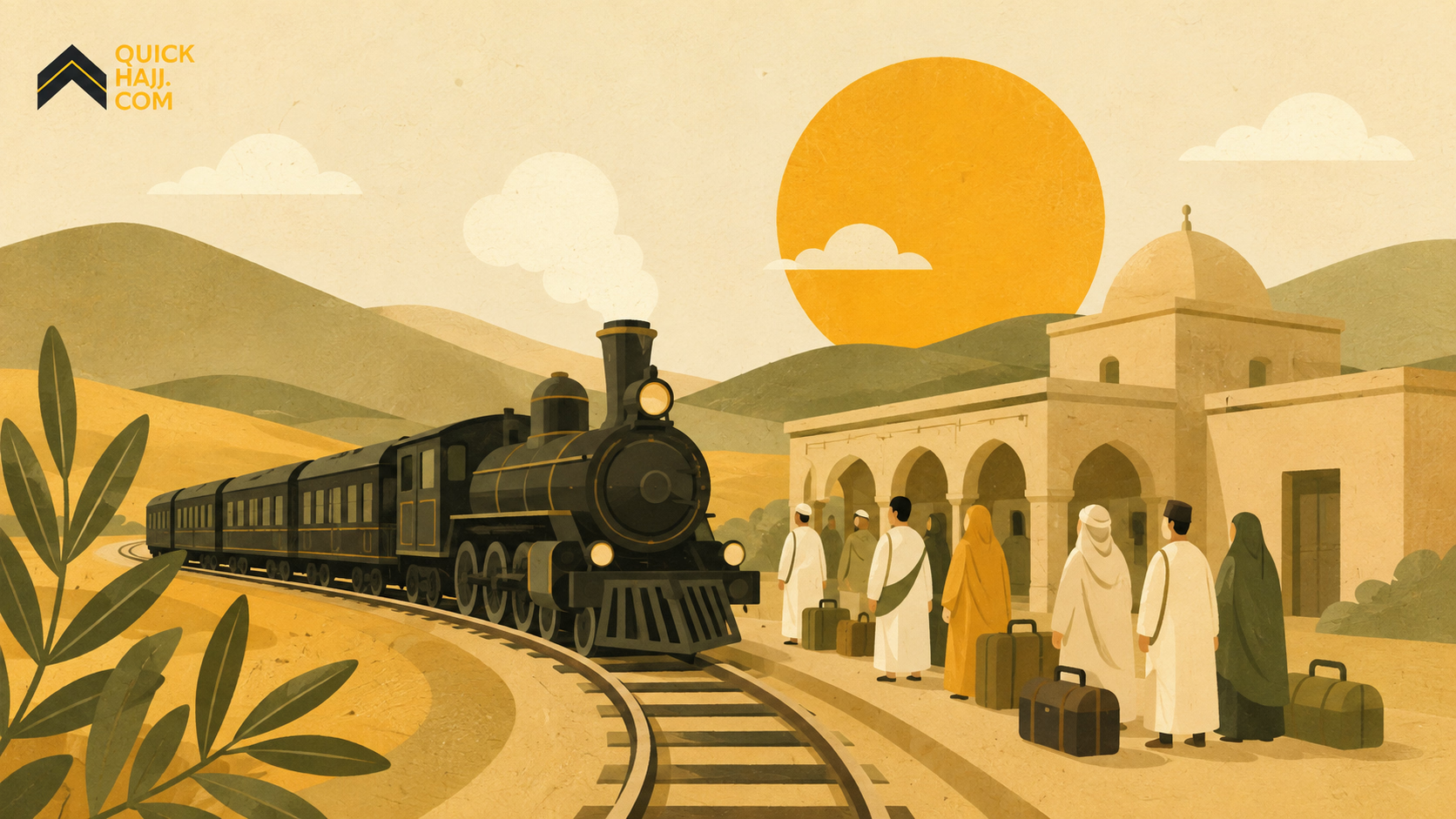
In the early 20th century, Sultan Abdul Hamid II launched one of the most ambitious infrastructure projects in Islamic history: the Hejaz Railway.
A Vision of Unity
The primary goal was to facilitate the Hajj pilgrimage. Before the railway, the journey from Damascus to Madinah took 40 days by camel caravan, fraught with dangers of heat and bandits. The railway reduced this grueling journey to just 5 days.
It was also a strategic project to unify the Ottoman provinces and strengthen the Caliphate's control over the Hejaz.
Funded by the Ummah
Uniquely, the project was funded entirely by donations from Muslims around the world, not by foreign loans. It was a symbol of Pan-Islamic unity.
Engineering Marvel
Construction began in 1900 and reached Madinah in 1908. It traversed harsh desert terrain, requiring innovative engineering solutions.
The End of the Line
Tragically, the railway was severely damaged during World War I (famously attacked by T.E. Lawrence and Arab rebels). It ceased operations in 1920.
Today, the remnants of stations and tracks stand as a nostalgic reminder of a time when the Muslim world rallied together for a common cause—the service of the Pilgrims of Allah.